

KCNA3 (Kv1.3) Antibody
Description
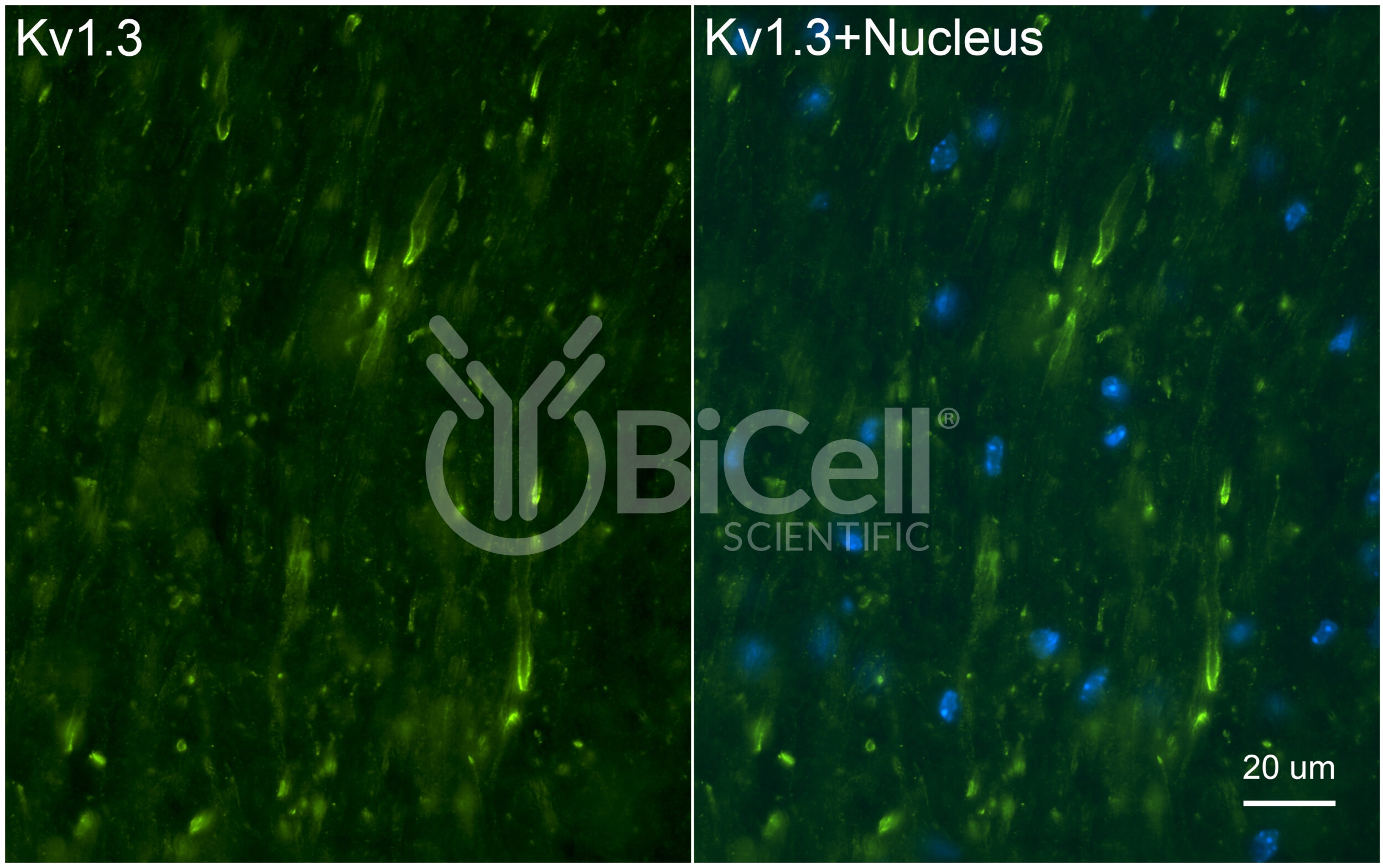
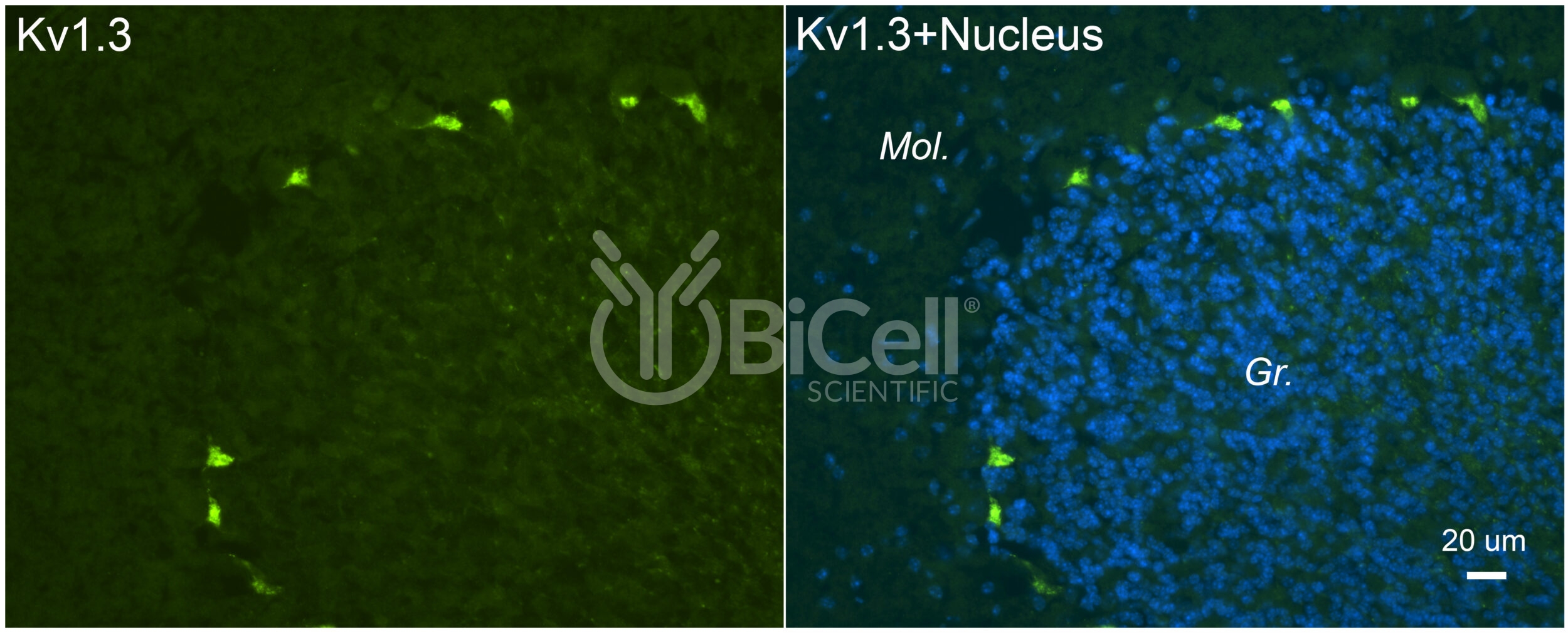
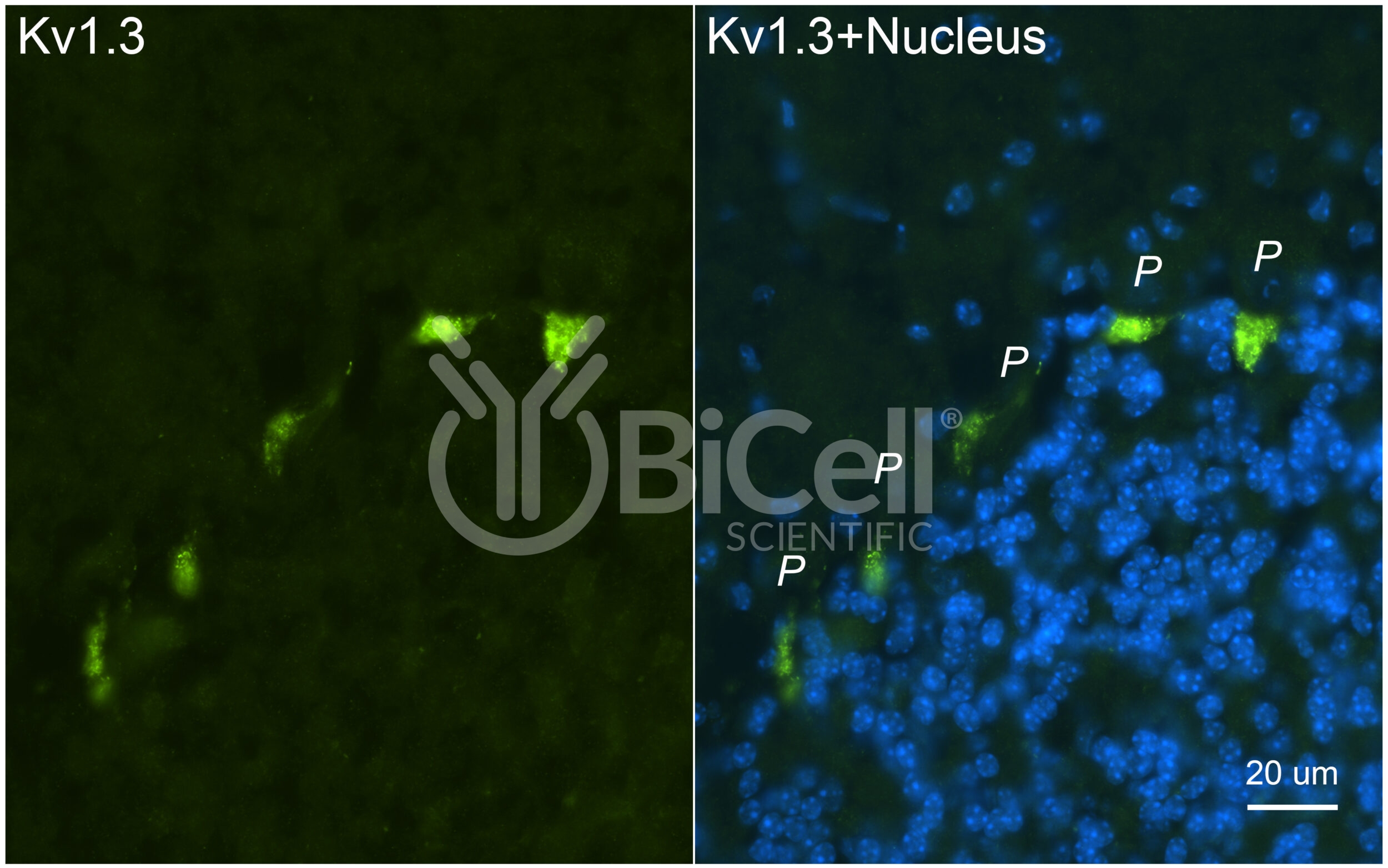
Anti-KCNA3 (Kv1.3) antibody is validated on mouse tissue and recommended for immunofluorescence labeling, IHC, or western blot of materials from rodent and human tissues. Potassium voltage-gated channel subfamily A member 3 (KCNA3), also known as Kv1.3, is a shaker related voltage-gated potassium channel that is encoded by the KCNA3 gene in human. Kv1.3 consists in six membrane-spanning domains with a shaker-type repeat in the fourth segment. It belongs to the delayed rectifier class, members of which allow nerve cells to efficiently repolarize following an action potential. It plays an essential role in T-cell proliferation and activation. Kv1.3 channels have been found to be highly expressed by activated and plaque-associated microglia in human Alzheimers disease (AD) post-mortem brains.
| Application: | Immunofluorescence, Immunohistochemistry, Western Blot |
|---|---|
| Clonality: | Polyclonal |
| Concentration: | 0.25 mg/ml |
| Conjugation: | Unconjugated |
| Host: | Rabbit |
| Immunogen: | Synthetic peptide (14-aa) derived from the C-terminal region of human Kv1.3 protein |
| Isotype: | IgG |
| Purification: | Affinity Chromatography |
| Reactivity: | Human, Mouse, Rat |
| Species Homology: | Synthetic peptide sequence is identical to mouse or rat sequence |
| Storage: | -20°C |
| Storage Buffer: | PBS, pH 7.2, 0.1% Sodium Azide |