

LSR (Angulin-1) Antibody
Catalog-Number:
00301
Storage
-20°C
Description
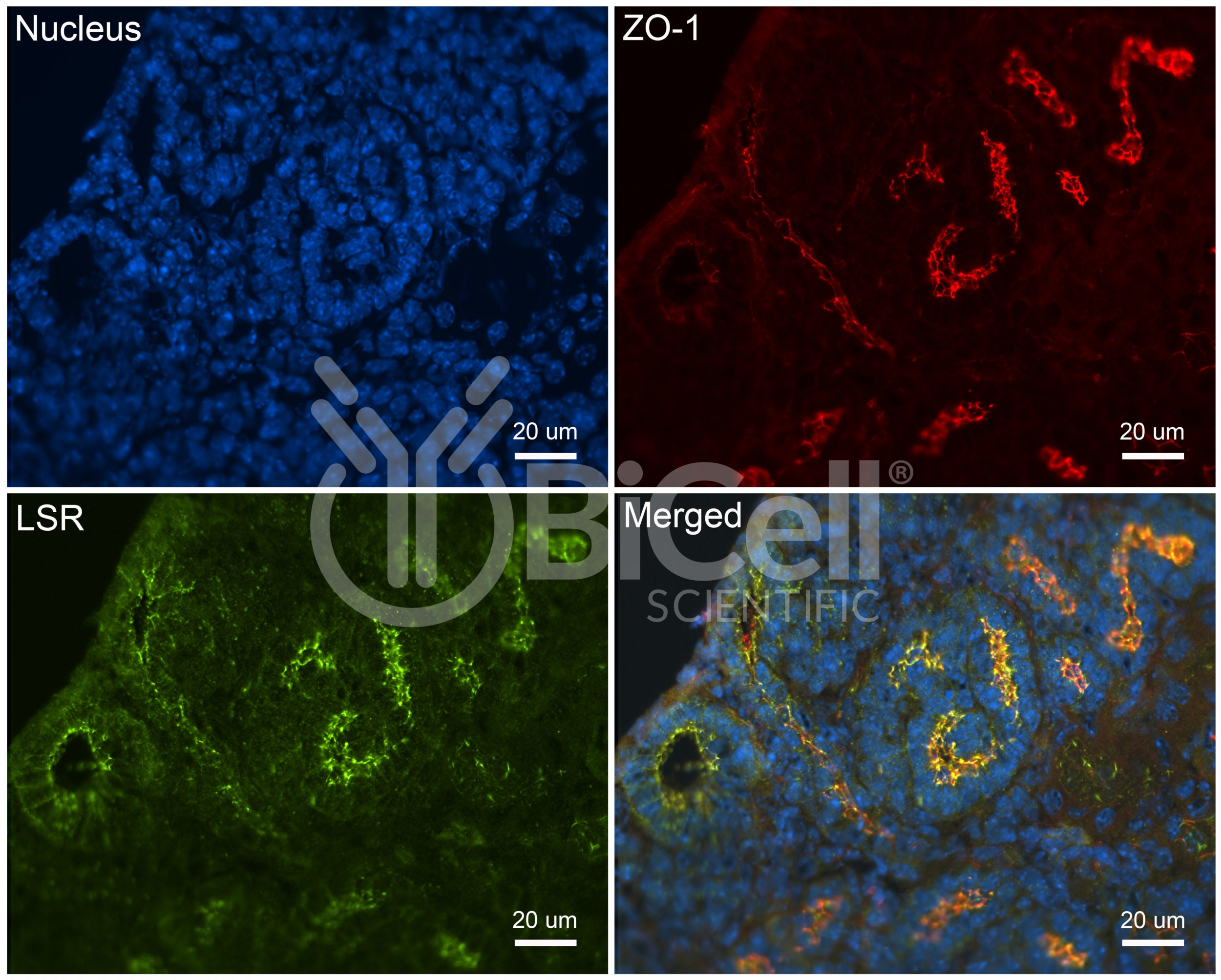
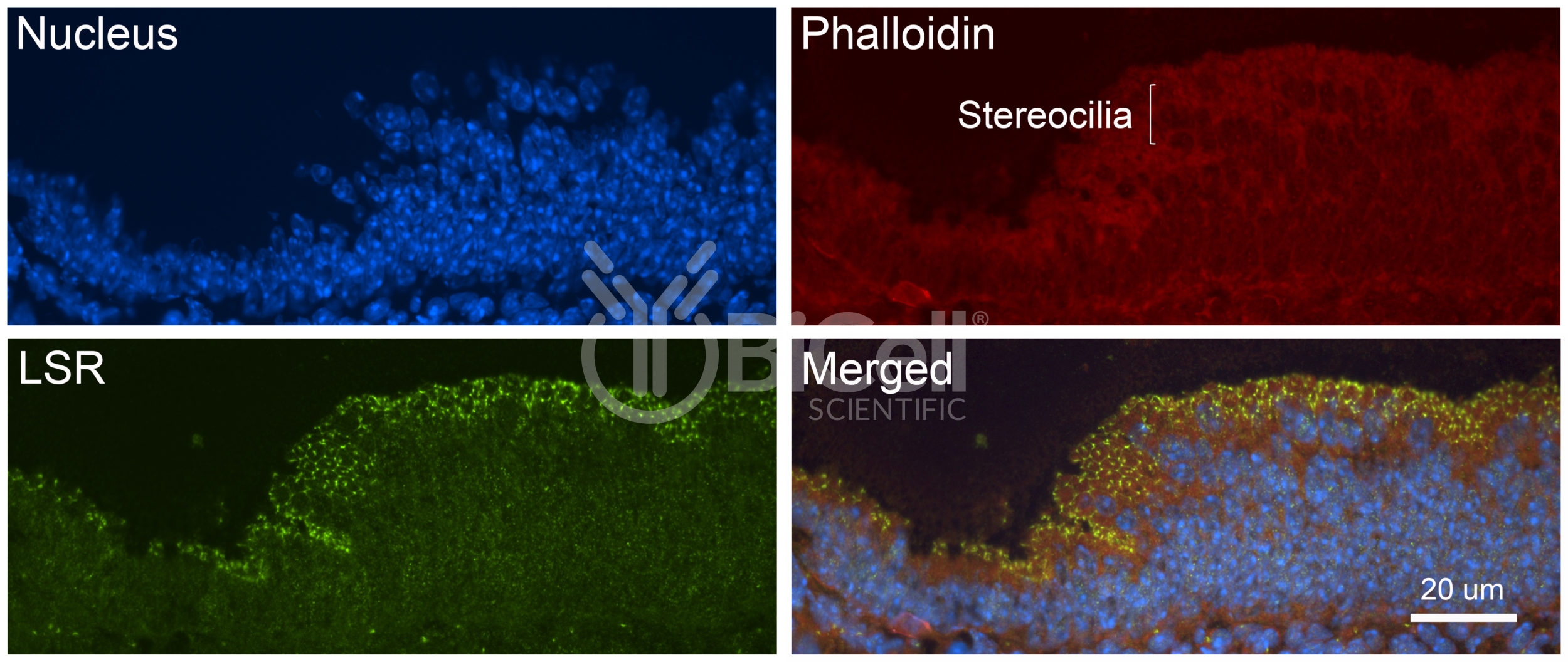
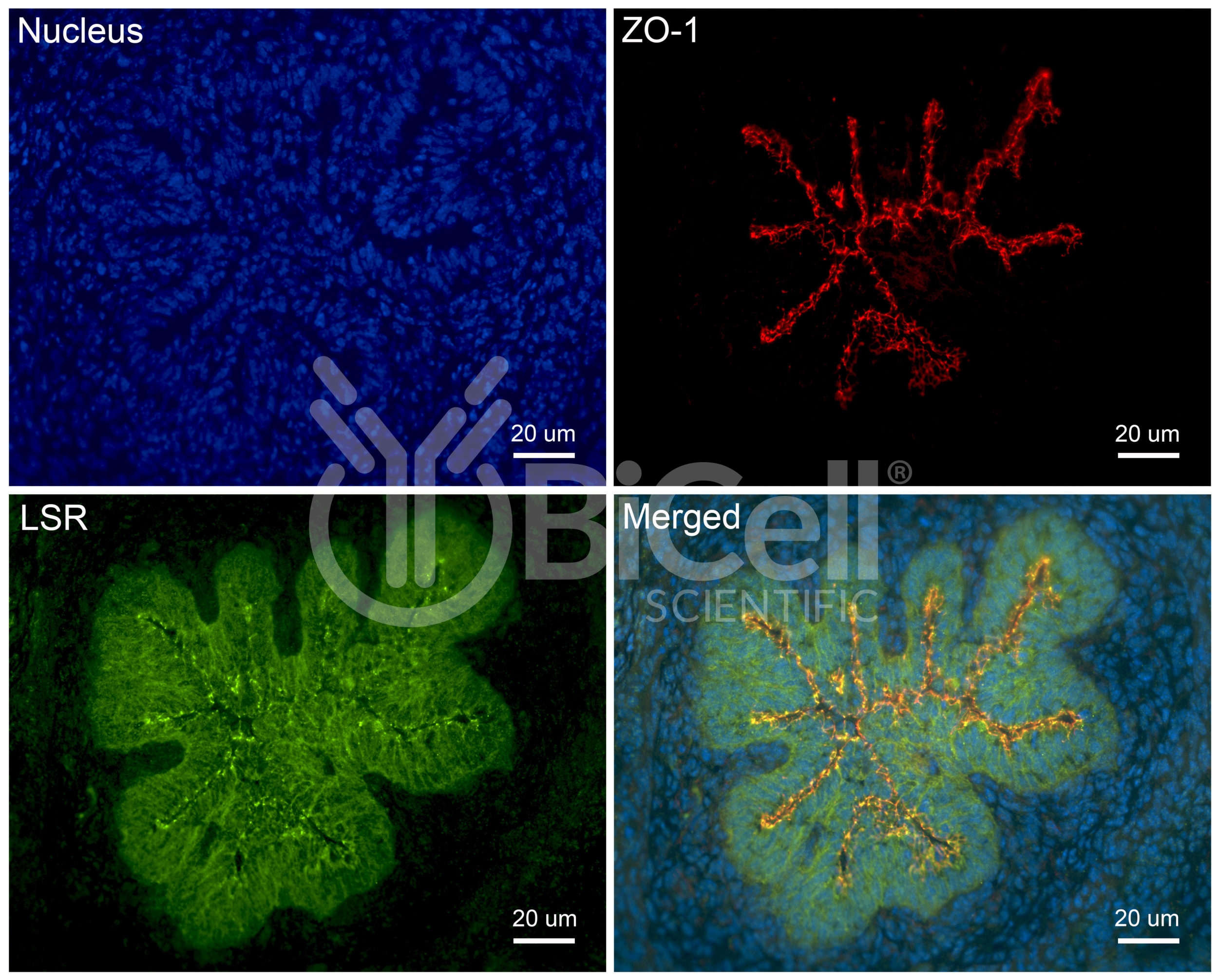
Anti-LSR (Angulin-1) antibody is validated on mouse tissue and can be used for immunofluorescence labeling, IHC, or western blot of materials from rodent and human tissues. LSR, which stands for lipolysis-stimulated lipoprotein receptor, also known as angulin-1, belongs to the angulin protein family, which makes the tricellular tight junction in epithelium or endothelium. LSR is encoded by the LSR gene in human. LSR has a single transmembrane domain, an amino-terminal extracellular Ig-like domain, and a carboxyl-terminal cytoplasmic domain. LSR is primarily expressed in the sensory hair cells from the organ of Corti in the inner ear as well as a variety of epithelial tissues.
| Application: | Immunofluorescence, Immunohistochemistry, Western Blot |
|---|---|
| Clonality: | Polyclonal |
| Concentration: | 0.25 mg/ml |
| Conjugation: | Unconjugated |
| Host: | Rabbit |
| Immunogen: | Synthetic peptide (13-aa) derived from the C-terminal intracellular region of human LSR protein |
| Isotype: | IgG |
| Purification: | Affinity Chromatography |
| Reactivity: | Human, Mouse, Rat |
| Species Homology: | Synthetic peptide sequence is identical to mouse or rat sequence |
| Storage: | -20°C |
| Storage Buffer: | PBS, pH 7.2, 0.1% Sodium Azide |