

Sarcoglycan Zeta (SGCZ) Antibody
Catalog-Number:
54706
Storage
-20°C
Description
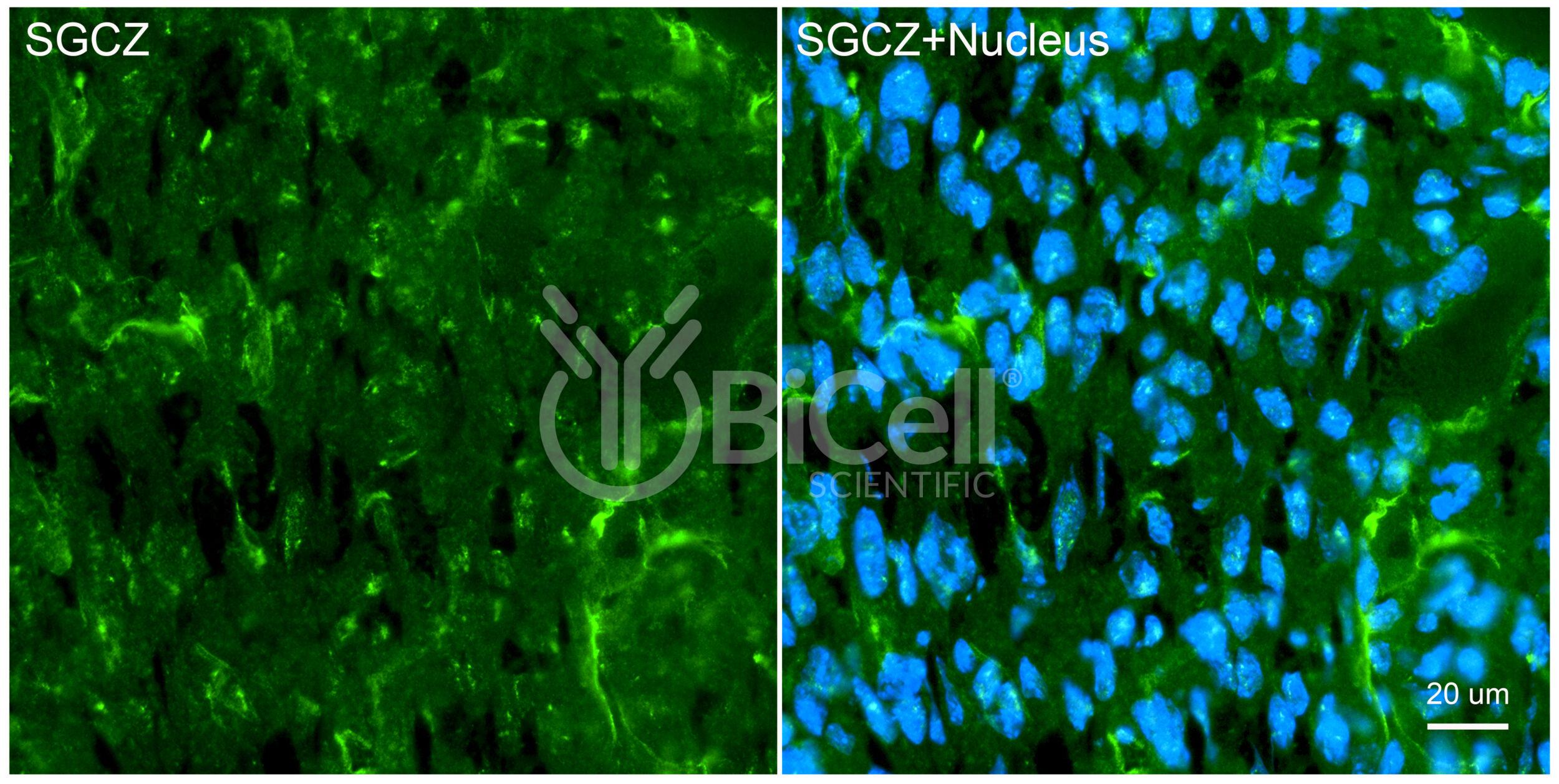
Anti-Sarcoglycan Zeta (SGCZ) antibody is validated on mouse tissue and recommended for immunofluorescence labeling, IHC, or western blot of materials from rodent and human tissues. Zeta-sarcoglycan is a membrane protein that is encoded by the SGCZ gene in human. Sarcoglycans are transmembrane components in the dystrophin-glycoprotein complex which help stabilize the muscle fiber membranes and link the muscle cytoskeleton to the extracellular matrix. Zeta-sarcoglycan is reduced in mouse models of muscular dystrophy and SGCZ is found as a component of the vascular smooth muscle sarcoglycan complex.
| Application: | Immunofluorescence, Immunohistochemistry, Western Blot |
|---|---|
| Clonality: | Polyclonal |
| Concentration: | 0.25 mg/ml |
| Conjugation: | Unconjugated |
| Host: | Rat |
| Immunogen: | Synthetic peptide (15-aa) derived from the N-terminal cytoplasmic region of human Sarcoglycan Zeta protein |
| Isotype: | IgG |
| Purification: | Affinity Chromatography |
| Reactivity: | Human, Mouse, Rat |
| Species Homology: | Synthetic peptide sequence is identical to mouse or rat sequence |
| Storage: | -20°C |
| Storage Buffer: | PBS, pH 7.2, 0.1% Sodium Azide |