

ZO-1 (Tjp1) Antibody (N-Terminus)

Description
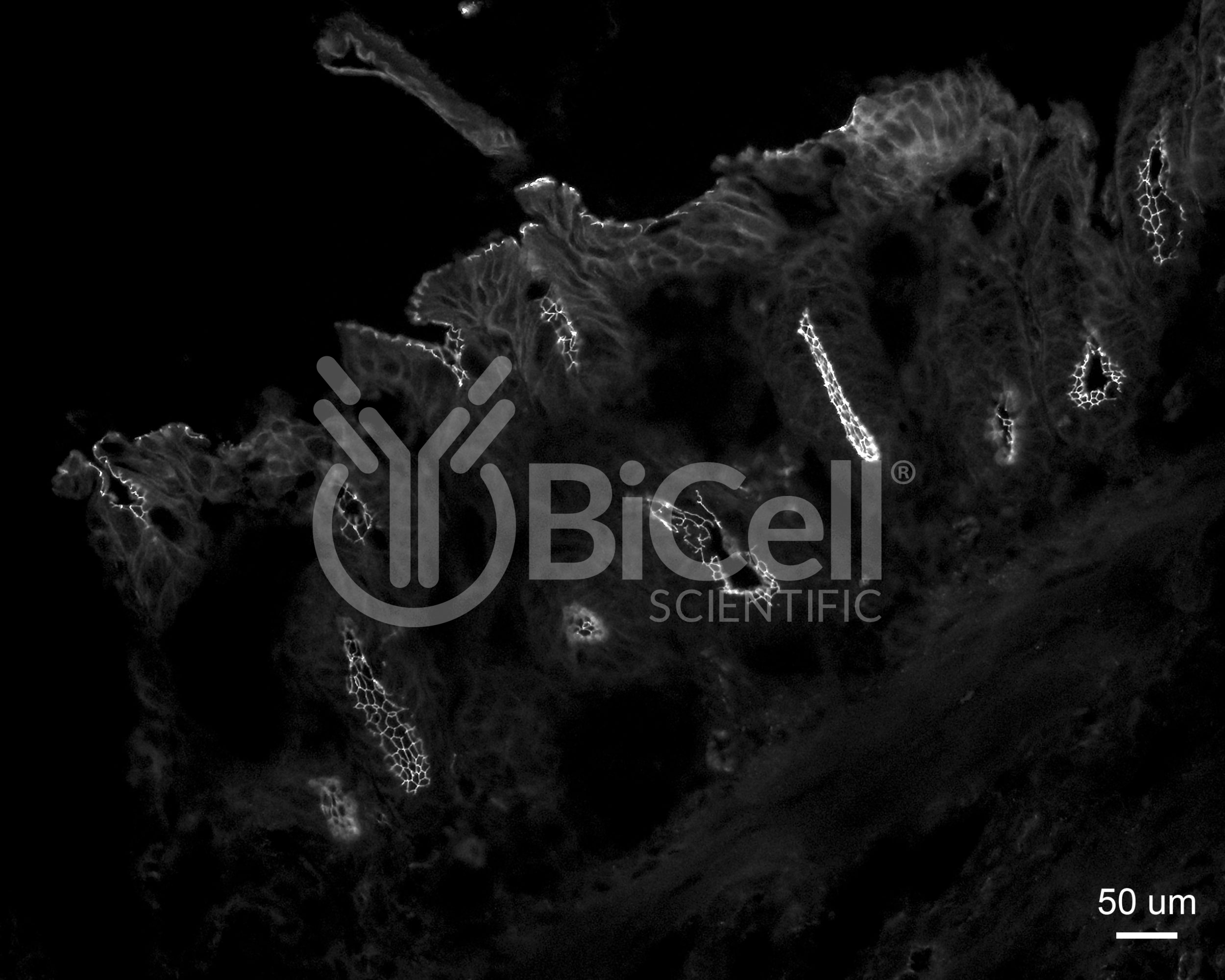
Anti-ZO-1 (Tjp1) (N-terminus) antibody is validated on mouse tissue and can be used for immunofluorescence labeling, IHC, or western blot of materials from rodent and human tissues. Zonula occludens-1 (ZO-1), also known as tight junction protein-1 (TJP1) is a 220-kD tight junction peripheral protein encoded by the TJP1 gene in human. ZO-1 contains three PDZ domains, an SRC homology 3 (SH3) domain, and a yeast guanylate kinase homology (GUK) domain. ZO-1 can interact with tight junction integral proteins such as claudins and occludin and with the perijunctional cytoskeleton. ZO-1 is expressed in a variety of epithelial tissues including the kidney, the intestines, the lung, the liver, the pancreas and more. ZO-1 appears to play a role in mechanosensation of the cell junction. Tension may stretch the ZO-1 molecule in cells. The anti-N-terminus antibody, when used with the anti-C-terminus antibody, allows detecting the tension triggered ZO-1 molecular alteration by super-resolution imaging approaches.
| Application: | Immunofluorescence, Immunohistochemistry, Western Blot |
|---|---|
| Clonality: | Polyclonal |
| Concentration: | 0.25 mg/ml |
| Conjugation: | Unconjugated |
| Host: | Rabbit |
| Immunogen: | Synthetic peptide (18-aa) derived from the N-terminal region of human ZO-1 protein |
| Isotype: | IgG |
| Purification: | Affinity Chromatography |
| Reactivity: | Human, Mouse, Rat |
| Species Homology: | Synthetic peptide sequence is identical to mouse or rat sequence |
| Storage: | -20°C |
| Storage Buffer: | PBS, pH 7.2, 0.1% Sodium Azide |