
ATP2A1 (SERCA1) Antibody - FFPE Validated

BiCell Scientific
SKU:54031-FFPE-50UL
Couldn't load pickup availability
Scientific Overview
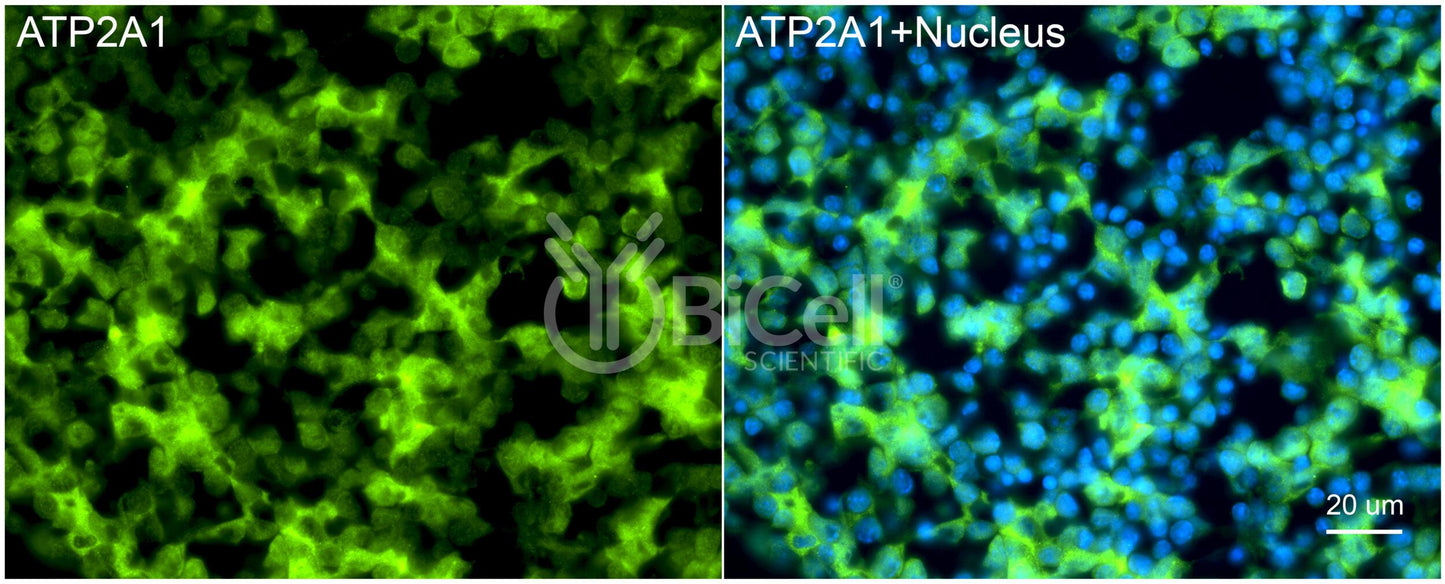
This antibody is suited for researchers who want to analyze ATP2A1 (SERCA1) and relate it to cell-state biology. ATP2A1 is a protein of interest for mapping abundance changes across conditions and cell states. Its behavior can reflect changes in differentiation state, stress, or remodeling of cellular architecture.
In some datasets and protocols, it is referenced by the gene symbol SERCA1.
Research Relevance
Integrating localization with abundance measurements can clarify whether changes reflect trafficking or regulation. Because regulation can be multi-layered, combining abundance and localization information can sharpen conclusions.
When cell-state transitions occur, this target may change alongside partners in the same compartment or pathway neighborhood.
When building a narrative around the target, it helps to track:
- subcellular compartment mapping
- interpretation alongside orthogonal readouts
- cross-sample normalization strategies
Application-Specific Context
Because fixation can mask epitopes, fixed-section oriented formats aim to maintain recognition after standard deparaffinization and retrieval steps. Think about how preparation affects epitope accessibility, and interpret patterns alongside morphology and compartment markers as needed.
If your study spans multiple model systems, it can help to define a shared reference condition for ATP2A1 so cross-sample contrasts stay meaningful.
For challenging targets, pairing ATP2A1 measurements with a second marker can clarify whether differences arise from regulation, redistribution, or shifts in cell composition within the sample.
The fixed-section version supports deeper biological narratives around ATP2A1 (SERCA1) without overcomplicating setup.
- Targets:
- ATP2A1
- Research Area:
- Metabolism
- Application:
- IHC-P
- Reactivity:
- Human • Mouse • Rat
- Host:
- Rat
- Clonality:
- Polyclonal
- Isotype:
- IgG
- Immunogen:
- Synthetic peptide (14-aa) derived from the N-terminal cytoplasmic region of human ATP2A1 protein
- Conjugation:
- Unconjugated
- Purification:
- Affinity Chromatography
- Concentration:
- 0.25 mg/ml
- UniProt:
- O14983
- Homology:
- Synthetic peptide sequence is identical to mouse or rat sequence
- Storage Buffer:
- PBS, pH 7.2, 0.1% Sodium Azide
- Storage Temperature:
- -20°C
For Research Use Only. Not intended for diagnostic or therapeutic use.
Products may be subject to intellectual property rights.
The purchase of this product does not grant any license for commercial use, manufacturing, or clinical applications. The user is responsible for ensuring compliance with applicable laws and third-party rights.