
BBS1 Antibody (N-Terminus)

BiCell Scientific
SKU:90201N-50UL
Couldn't load pickup availability
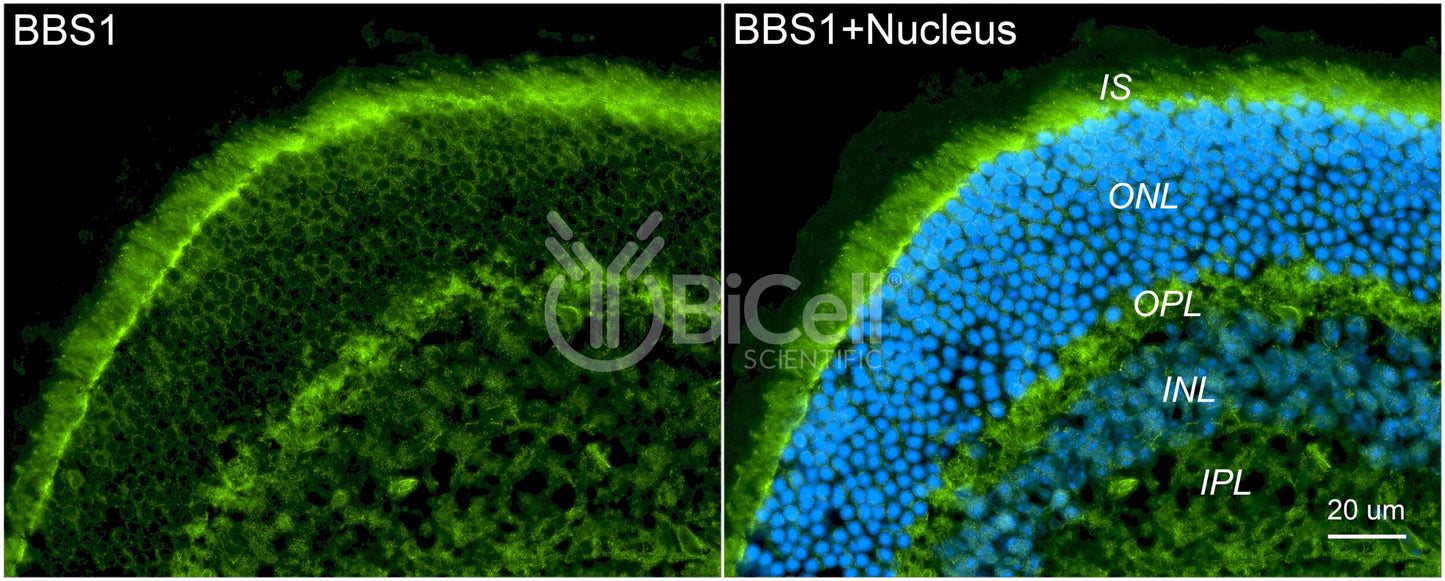
Protein Function
Designed to help you evaluate BBS1 Antibody N-Terminus, this antibody supports studies where protein context matters. BBS1 Antibody N-Terminus is a microtubule-organizing element often evaluated in cell-cycle and cilia studies. Its behavior can reflect changes in differentiation state, stress, or remodeling of cellular architecture.
Monitoring BBS1 Antibody N-Terminus alongside context markers can improve interpretation when phenotypes are subtle.
Experimental Applications
Disruption of intraflagellar transport or basal body function can produce distinct localization signatures. Because regulation can be multi-layered, combining abundance and localization information can sharpen conclusions.
Target-centric readouts can be framed around localization, relative abundance, or complex behavior, depending on the question you are testing.
Common experimental questions that benefit from target tracking include:
- signal enrichment at basal bodies versus cytoplasm
- co-occurrence with intraflagellar transport markers
- changes in cilia incidence or apparent length in perturbation studies
Workflow Perspective
This regular format is a practical starting point when you want flexibility across sample types and iterative optimization. To keep comparisons consistent, align sample preparation steps and define a clear baseline for each series.
When interpreting BBS1 Antibody N-Terminus, consider whether changes track with compartment identity, cell density, or perturbation timing; these factors can influence apparent signal without implying a direct causal link.
Use the regular format variant when your project demands BBS1 Antibody N-Terminus readouts that respect preparation constraints.
- Targets:
- BBS1
- Research Area:
- Cell Cycle • Developmental Biology
- Application:
- IF • IHC • WB
- Reactivity:
- Human • Mouse • Rat
- Host:
- Rabbit
- Clonality:
- Polyclonal
- Isotype:
- IgG
- Immunogen:
- Synthetic peptide (18-aa) derived from the N-terminal region of human BBS1 protein
- Conjugation:
- Unconjugated
- Purification:
- Affinity Chromatography
- Concentration:
- 0.25 mg/ml
- UniProt:
- Q8NFJ9
- Homology:
- Synthetic peptide sequence is identical to mouse or rat sequence
- Storage Buffer:
- PBS, pH 7.2, 0.1% Sodium Azide
- Storage Temperature:
- -20°C
For Research Use Only. Not intended for diagnostic or therapeutic use.
Products may be subject to intellectual property rights.
The purchase of this product does not grant any license for commercial use, manufacturing, or clinical applications. The user is responsible for ensuring compliance with applicable laws and third-party rights.