
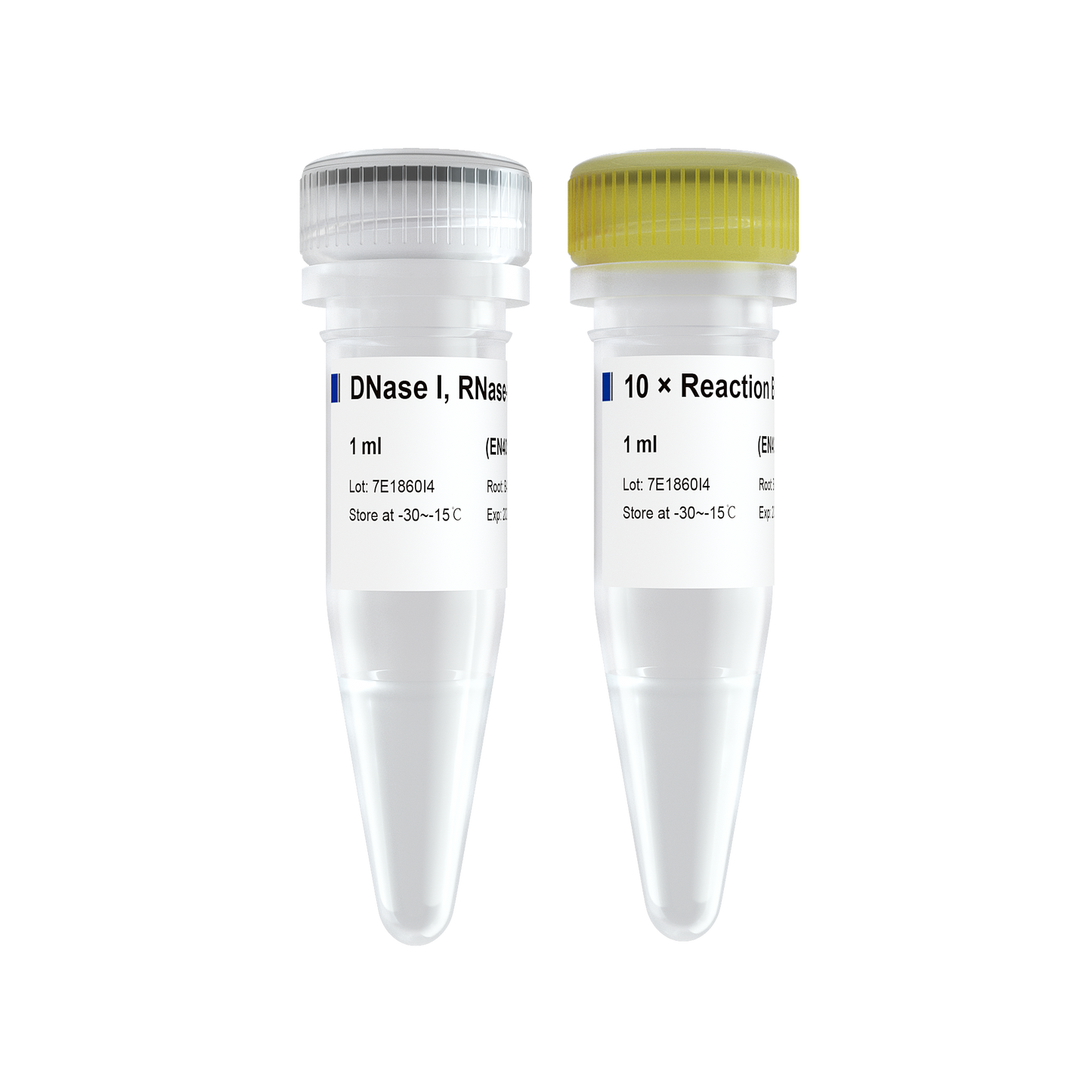
DNase I, RNase-free (1 U/μl)

Vazyme Biotech
SKU:EN401-01
Couldn't load pickup availability
Overview
DNase I, RNase-free (1 U/μl) is a research-use reagent supporting nucleic acid isolation workflows. Deoxyribonuclease I (DNase I) is an endonuclease that digests single- or double-stranded DNA. To support repeatable purchasing and recordkeeping, the copy reflects the supplied description and features—without overpromising beyond what’s provided.
Key Benefits
- Deoxyribonuclease I (DNase I) is an endonuclease that digests single- or double-stranded DNA.
- It recognizes and cleaves phosphodiester bonds to produce a single deoxynucleotide or single- or double-stranded oligodeoxynucleotide with 5'-phosphorylated and 3'-hydroxylated ends.
- The activity of DNase I depends on Ca2+, and DNase I can also be activated by divalent metal ions such as Mg2+ and Mn2+.
- Clear, structured description for faster review and fewer purchasing errors.
How it supports your workflow
Research workflows move faster when the product choice, rationale, and documentation are all in sync—especially for routine assays and repeat ordering. For nucleic acid isolation workflows, the goal is often to keep the scientific rationale and the purchasing record aligned. Deoxyribonuclease I (DNase I) is an endonuclease that digests single- or double-stranded DNA. It recognizes and cleaves phosphodiester bonds to produce a single deoxynucleotide or single- or double-stranded oligodeoxynucleotide with 5'-phosphorylated and 3'-hydroxylated ends. The activity of DNase I depends on Ca2+, and DNase I can also be activated by divalent metal ions such as Mg2+ and Mn2+. Because projects evolve, we aim for descriptions that remain searchable, specific, and easy to compare across catalog numbers—so you can reorder confidently and keep documentation consistent. It also helps when you need to hand off a method to a colleague, reference a catalog item in a report, or keep purchasing approvals moving without back-and-forth.
Applications & compatibility
Compatibility is most useful when it’s stated plainly, so teams can match products to their existing workflows. Based on the supplied information, it’s positioned for nucleic acid isolation workflows where clear documentation and straightforward compatibility notes matter. If you’re matching this item to an established SOP, use the product name, catalog number, and the supplied features as the primary reference points. Use the application notes as a scope guide: they indicate fit and compatibility language drawn from the supplied product information, not assumptions beyond it.
Ideal for: teams building or refining nucleic acid isolation workflows workflows, especially when multiple users need the same language for ordering, reporting, and day-to-day bench notes. Ideal when you need a quick, confident match between what’s on the page and what’s in your records.
- Storage Temperature:
- -20°C
For Research Use Only. Not intended for diagnostic or therapeutic use.
Products may be subject to intellectual property rights.
The purchase of this product does not grant any license for commercial use, manufacturing, or clinical applications. The user is responsible for ensuring compliance with applicable laws and third-party rights.